My Sister, My Love
Labels: composition, electronic music, mordake, music, opera
The book-larnin' study of Composition and its even poorer cousins of Species Counterpoint and ostensible Harmony didn't teach me much of what I needed to know to actually succeed as a soi-disant composer. Here is an almost surely abridged list of what skills were needed just for Mordake. I publish this only in the interest of scaring off some young bucks and does and reducing the competition for various grants and whatnot.Labels: composition, mordake, music, opera
Labels: art, beauty, composition, depression, mordake, opera
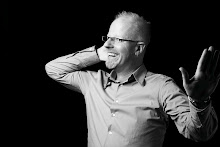
I'm quite smug and pleased with myself as seen above in Noah Berger's shot for the Chronicle. I am imagining myself as Erling and also seemingly as a person who has a rod jammed deep into his bowels. Joshua Kosman has written a lovely feature on me and the opera and I am allowing myself a bit of vain rodomantade and narcissism. In fact, I am going to go outside into my backyard right now and lean over the pond where the Gambusia are leaping through clouds of mosquitos and just stare at my own reflection, possibly falling in love with it and, unlike the love featured in my typical but-I-just-have-so-much-love-to-give story, this love will be a love that excludes all others. In this quiet beautiful space I can't hear Lynne's remonstrations as to how it's her house in Potrero Hill and her Garden and her etc and how I am just a freeloading gigolo and so on and so forth.Labels: lynne rutter, mordake, press, vanity
Once again on Bunnywhisker's show on Pirate Cat Radio. John was supposed to come with me to plug the opera, and I pestered him about it, feeding him prawns from my own hand and soaking his gut with alcohol to get him in the mood, but unfortunately this caused in him the opposite reaction, and he crashed bad, limping back to his hovel to sleep off the long hours of rehearsal day after day. The show has been fun as usual, broadcast booth filled with interesting people, like the stage at a house music concert, or maybe more aptly like the gaggle of oddballs in the Howard Stern studio. Labels: bunnywhiskers, mordake, music, opera, trauma flintstone
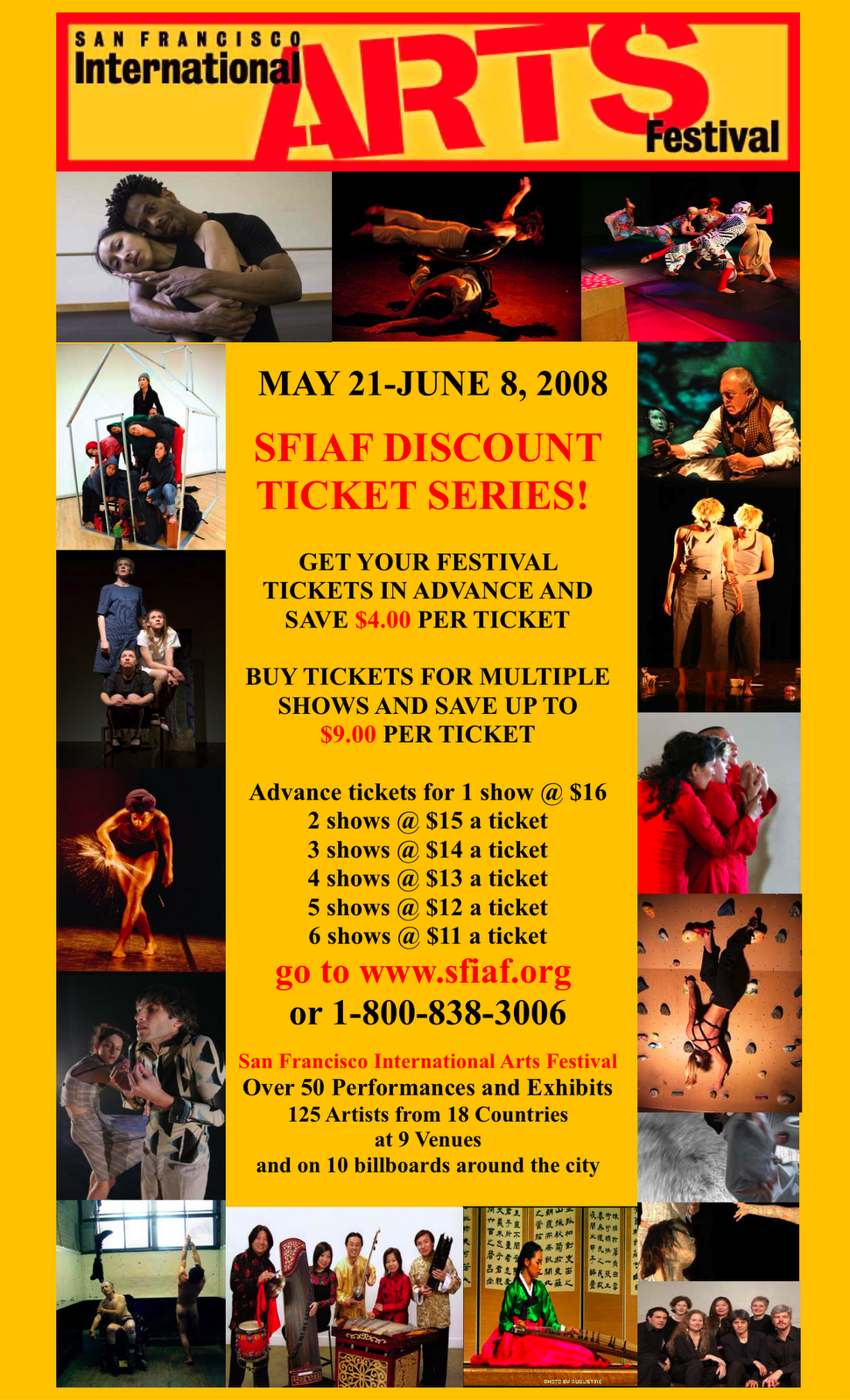
Theatre Bay Area Magazine is featuring Mordake on the cover as part of an article about the SF International Arts Festival. The article quotes me quite a lot, even going so far as to extemporize a bit beyond what I may have actually said. But what the hey. Labels: john duykers, mordake, opera
I was informed by electronic post late last night that Lynne has been blogging her work for Mordake. As of yesterday morning I finally finished setting the last of Douglas's text, almost just barely too late as we really are in the middle of rehearsals, and Herr Weiß is here only for another week or so, and M. Duykers is back in Florida performing final excruciations on his students. Several would-be assistants had other projects interfere with their participation, but luckily our friend Diana showed up direct from Amersfoort NL, firmly gripped the handle of our construction problems, caused the Jack in the Box to pop out, and has left us all deeply satisfied with her work. Labels: composition, douglas kearney, frieder weiss, john duykers, lynne rutter, mordake, music, opera
Labels: beauty, composition, mordake, music, opera, tune of the day
Dearest friends, folks and loved ones,Labels: composition, mordake, music

Labels: beauty, depression, frieder weiss, krafft-ebing, mordake, music, politics, sexuality
Labels: art, beauty, composition, douglas kearney, john duykers, kathleen crowley, mordake, music, opera, poetry
Since the diminution of the Jesuit educational system, we artists can no longer count on the average audience understanding many Western cultural references that used to be taken for granted: the Classical, Mythological, Biblical, Shakespearean former pillars of cultural literacy. However, our librettist, in his bull-headedness, has chosen to ignore this fact, to eschew the requisite references to pop song lyrics and celebrity couplings and instead to rely on some of those very allusions, those facts unavailable to all of us whose education consisted merely of smoking dope in the girl's restroom and leaving thumbtacks on the teacher's chair until that sad day when social promotions pushed us out into the real world, woefully unprepared for highbrow operas. So, to remedy that, I will give a brief rundown of one that appears in the abridgement of Mordake which we are about to witness.
many statues and coins and busts and gems bearing his likeness, all recording his famous pouting lips, considered his most distinctive feature.Labels: beauty, john duykers, kathleen crowley, mordake, music, opera, sexuality
is to survive from now till a week from Thursday: the Teaser showing of Mordake at the Intersection. It's a homecoming of sorts; I presented my very first chamber opera at the Intersection back in 1995. The Intersection is a beautiful intimate space and it's going to be great fun to put up a section of the piece there, also following the very important plan of getting everyone drunk enough beforehand to appreciate it all properly. But the survival issue comes from having a day job as well as a night job or maybe two lives in two parallel universes. Like Mordake, I can't seem to integrate both in healthy way. So far I've done it by stressing myself to the point of near death, working from morning until night on one and then from night to the week hours on the other, catching a bit of sleep and proceeding again.Labels: depression, mordake, music, opera
Many Western classical composers have became enamored with their scores but, although scores are sometimes very pretty, they aren't really the thing itself, are they? I happened to run across this old and somewhat embarrassing program note of mine in one of my many self-googling expeditions:Labels: amy crehore, composition, lynne rutter, mordake, music, opera
In the afterword to Revenge, Stephen Fry discusses how the author, upon the arrival of the new book, is asked the only questions that matter to the reader:Labels: composition, mordake, music, opera
I've been meaning to mention Jarod DCamp's new microtonal radio station 81/80, aptly named after the comma of Didymus, one of my most favorit-est intervals, appearing in a melody in Tune for Lynn Murdock #2, at least as I remember. The radio station is a great source of serendipitous discovery, a very eclectic set of tunes showcasing a wide variety of styles, putting paid to the oft-said notion of the microtonal 'style.' The station features a number of people I've met over the years, plus all those who came after I stopped paying as much attention, and the web site seems to have an old picture of me by Debra St John. Note that Kyle Gann has blogged the station and we would all do well to search in this entry for the current blog title and read the surrounding paragraph. I myself have promised to do a little tuning up of the Mordake opera.Labels: composition, just intonation, microtonality, mordake, music
While I was drinking my way through Old Europe last week the Mordake Suite #1 was played on Music from Other Minds, the radio arm of the Other Minds Festival, hosted by Jim Bisso's friend and former colleague at Sun Microsystems Richard Friedman. Jim was in fact 'riffed' from his job last week and has once more taken the reigns of the gelded stallions of the Leisure Class, giving him more time to work on our sex comedy libretto. Oh, how I wish for such a forced retirement, the placing in the lock of my golden handcuffs the sacred key of freedom, to write the next in the series of my great works. After my trip I'm so in the mood to get back to it all, having had my arms loaded up with inspirational moments, visiting old friends in the arts and the technologies of art. I went to see my drinking buddy Alexei Kornienko conduct the piece of high modernism Evocation (1968) by Dieter Kaufmann, a Carinthian composer, in the Konzerthaus Wien with Elena Denisova as the violin soloist. The piece thrilled me like I haven't been thrilled for while, the sound of 40 strings and voices playing in a divisi cacophony of dramatic gestures, the members of the chorus frantically covering their ears and listening oh so closely to their tuning forks to get the next entrance, the soprano leaping from one unsupported frequency to one as far away as possible. I'm inspired to try to reach that level of dramatic height with my own poor fumblings through my own quite different approach. But I went because Alexei has conducted all my European opera performances, including the German versions of both Sub Pontio Pilato and A Little Girl Dreams of Taking the Veil, and Elena's 13 Capricen is an incredible virtuosic firework of violinism. Lynne was there as well, tolerating the din as she has not quite the acquired taste for it, but taking some lovely photos of the cramped stage. She's blogged a bit about the trip included some pics of me here. And, speaking of the blogging illness, filmmaker and colleague Sierra Choi seems to be now hacking up a bit of phlegm as well, writing anecdotes about me and also using our home in the pilot for her latest TV show. Some of Lynne's lovely works appear as well as my recent li'l waltz.Labels: composition, fashion, jim bisso, lynne rutter, mordake, music
In Saint-Sulpice, where my dear friend and mentor Donatien Alphonse-François de Sade Marquis was christened on a balmy summer day early in the month of June (Prairial for my Republican readers) 1740 and where Marcel Dupré was the organist for many years. The Paris Meridian runs through the church and also through the gaggle of Dan Brown fans tapping the floor to find the secrets to the Sanct Grael hidden below. Went to ISMIR in Vienna last week. A lot of people using MFCCs for similarity just like the old Muscle Fish patent. Had dinner with my good friend Mariko Wakita who played the Marceline-Marie rôle in die Nacht wird kommen... in Klagenfurt and Brühl and the singing Jenny in Blinde Liebe. Richard Friedman is going to play the Mordake Suite #1 on Music from Other Minds on the weekend. Talked to Mrs. Childs about how "Freddy" Hundertwasser used to hang around her dining room window to see if they were eating so he could seem to be serendipitously stopping by and, oh, are you eating, why yes, I'll just have some bread with butter. Has anyone else noticed how most artists are poor during their life and are capitalized on after their death? Yes, of course, we all know.
The San Francisco Composers Chamber Orchestra played the Mordake Suite #1 on Saturday. After a bit of studio magic I have a pretty good recording of it here. I was originally supposed to be in Europe for the premiere of the Notker Balbulus Mass on Saturday, but sadly it was delayed until next year, the cruelest month of next year that is. Fortunately my friend Robert Wechsler had the foresight to call the Kappelmeister before heading on the train to St Gallen. And, in related news, several key collaborations for the San Francisco Arts Festival next year have been announced and note my name in print. Smallish print maybe but ah, for this we live.
Several past posts by Kyle Gann (also here) reminded me about how much I've given up rhythmically to make my pieces playable by the performers available to me and how much I've allowed myself to be constrained by what others thought. I have to say that reading his blog in general has both shamed and inspired me and so I'm going to repeat and extend my comments here.Labels: composition, mordake, music, opera, rhythm
I've orchestrated some of my favorite bits from the Mordake work-in-progress and the SFCCO is presenting them next month, the 15th of September 2007, at Old First Concerts. It will be a primarily instrumental suite from the piece, but it does use a bit of a cylinder recording of the Prologo from Pagliacci by Antonio Scotti and also a manipulated recording of a snippet of the text by my friend Diana Pray. In the eventual production, it is believed that the Edvard Mordake character will listen to opera cylinder recordings from time to time, sometimes old and sometimes new. One thing nice about the old recordings is that the mix is so extreme in the direction of the voice that it's pretty easy to drown out the original orchestration and replace it with one's own.Labels: composition, mordake, music, opera
We just finished a week and a half in the Paul Dresher studio working on the Mordake project with everyone. It's very very preliminary but we did come up with some interesting looks. Who knows if any of it will make it into the final piece, but below are a couple of videos, the first consisting of various clips of interest set to an instrumental version of some of the music, and the second consisting of the opening narration and music with a sketch of some visuals. Sorry for the noisy sound in the first half - it's just from the camera microphone. Melissa Weaver directed, John Duykers performed, visuals by Frieder Weiss, camera mostly by Matt Jones, the room sketch by Lynne Rutter (after Renzo Mongiardino) and music written by me. The gender changing of John's voice was performed by the Korporate Marionettes software, written in the spectral domain† by yours truly with help from my dear colleague Thom Blum. It is always a treat to hear John sing and his voice is beautiful when left unencumbered by technology but, just like theatrical blood poured over the body of a beautiful woman, there is something quite excitingly creepy about the altered sound. And I do like the moment where the celesta comes in in a slowed-down stretto retrograde of the tune. Why yes ma'am, I am quite fond of them there irrational rhythms.Labels: frieder weiss, john duykers, mordake, music, opera
My old friend Frieder Weiss tootled over the cold Arctic wastelands on a barbarously early flight out of Nürnberg to come to the barren industrial wastelands of West Oakland to work on the Mordake opera. Or whatever we are calling it. There doesn't seem to be a good equivalent to the German word for musiktheater in English. It's either Opera, with all its connotational baggage of heavy breasted women caterwauling dying words of lament, lungs ravaged by tubercles, or it's the milksop of Musical Theater, prancing and skipping its way in to the listener's heartstrings by any means necessary. Labels: art, composition, frieder weiss, mordake, opera
John Duykers and I were on the radio last Sunday on KRCB, the local NPR station near his home in Sebastopol. He's a farmer as well as an internationally renowned opera singer, so he was the one invited onto what was ostensibly a food show, to wit Mouthful. A direct link to the podcast is here but it's also on iTunes. John brought in a lovely dish consisting of multiple potato species, kale, collards, and a buttery spicy drizzle. I would say that, if one wants to work in opera, one should make sure that the artists with which one works should provide at least one of your other basic human needs besides artistic fulfillment, e.g. companionship, fresh organic produce, sex, laughter, knowledge, linguistics, and so on. Maybe in a future post I will present a bipartite graph where the one of the two disjoint sets consists of my artistic partners and the other my basic human needs and the readers will be invited to draw in their guesses as to the graph edges. But I was on the show to provide some musical interludes (the quite lovely numbers brightness 2 and Casus Tertius) But work on Mordake is heating up in preparation for Frieder Weiss to come and give the visuals the Frieder touch. Light, but persuasive.Labels: frieder weiss, john duykers, mordake, radio
Labels: collaboration, composition, mordake, opera