Thursday, May 1, 2008

Name in Print

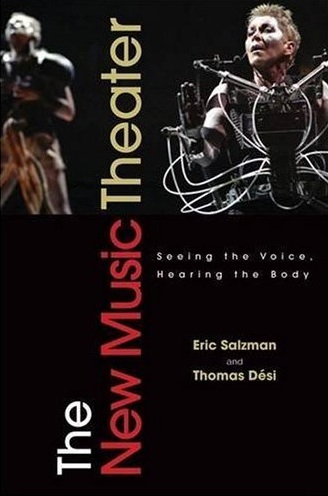
Theatre Bay Area Magazine is featuring Mordake on the cover as part of an article about the SF International Arts Festival.  The article quotes me quite a lot, even going so far as to extemporize a bit beyond what I may have actually said. But what the hey.  


Labels: , ,

Sunday, April 27, 2008

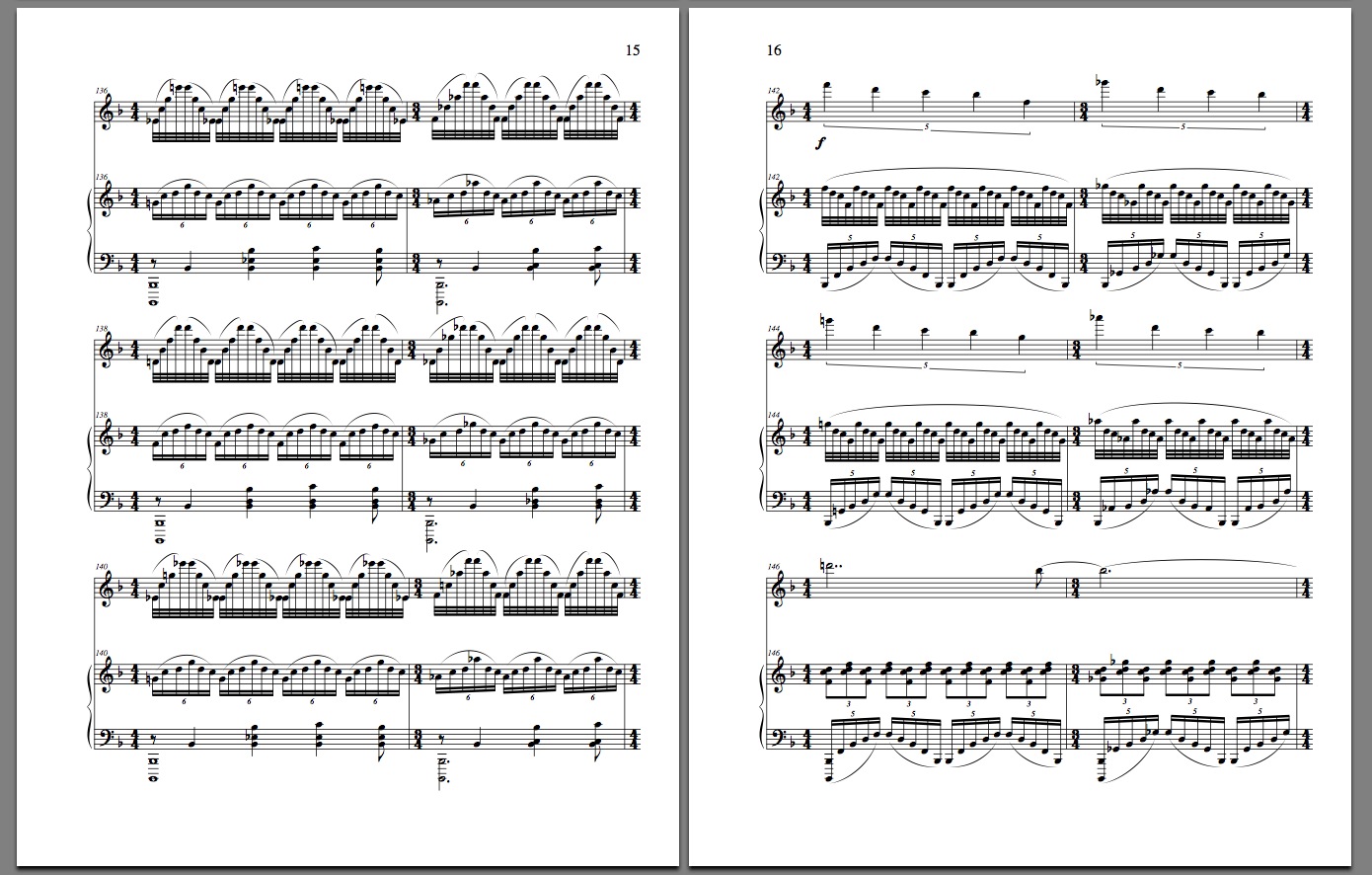
Mordake Visuals, Construction, Music et al

routeI was informed by electronic post late last night that Lynne has been blogging her work for Mordake. As of yesterday morning I finally finished setting the last of Douglas's text, almost just barely too late as we really are in the middle of rehearsals, and Herr Weiß is here only for another week or so, and M. Duykers is back in Florida performing final excruciations on his students. Several would-be assistants had other projects interfere with their participation, but luckily our friend Diana showed up direct from Amersfoort NL, firmly gripped the handle of our construction problems, caused the Jack in the Box to pop out, and has left us all deeply satisfied with her work. 

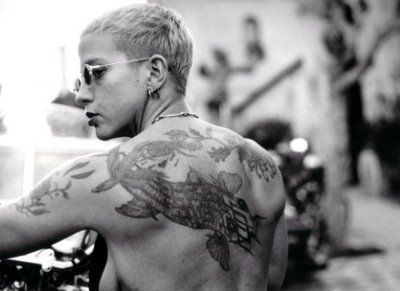
Mary Ellen Hunt dropped by to interview Frieder and me for a mention in the Chronicle's article about the SFIAF, but we've been corresponding a bit about those people who, like Mordake are double-faced.  She referenced the young Indian girl who is believed by some to be a reincarnation of Ganesh, I countered with Chang Tzu Ping (with a nod to the recent alleged Lakshmi reincarnation), and then on to various other facial tumors and skin ailments and so on. These photos disturb me a bit even though I wish I could just accept them as part of the continuum of human styles and substances.  Like the murder victim we happened across today draped with a cloth and surrounded by police tape and squad cars, they seem to remind me too much of my own fragile physical nature, one step away from worm dirt.

Labels: , , , , , , ,

Sunday, March 9, 2008

Poultice o' my heart

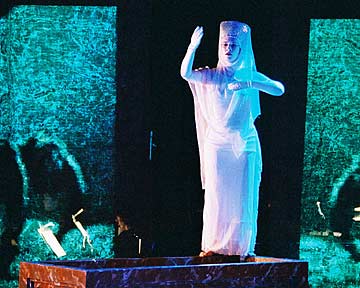
Concert of the SFCCO last night playing Mordake Suite Number 2, the darker one. Edward Mordake hisself was there to see it, as he enjoys a variety of methods of instantiation, in this case in Jennybird's doll form. Here's a recording of it hot off the press:


Also, the San Francisco International Arts Festival 2008 site went live today. The direct link to tickets for the Mordake premiere is here and I've been told there is a significant early bird discount.

Labels: , , , , ,

Sunday, January 20, 2008

Once there was a boy

Saturday, January 19, 2008

You great big beautiful doll

Jennybird's doll, based on the Mordake story.

Labels: , , ,

Monday, January 14, 2008

Theological, phrenological, surgical


John Duykers performing I'm no murderer from Mordake at Intersection for the Arts, San Francisco, 10th of January 2008. Libretto by Douglas Kearney, directed by Melissa Weaver, production by matt:matt, costume by Kathleen Crowley, with some buzzy extra sounds from Thom Blum, filming by James Bisso, with a backdrop of an altered photo taken by Lynne of a bedroom of the Reutlinger House.

I wrote the gender changing software used at the end - a phase vocoder with formant shifting - for Korporate Marionettes. In this aria, Edvard Mordake tries to shuffle off responsibility for beating his man onto The Other, his shadow, his sister. The text setting in this opera is turning out to be a bit different for me, less driven by the prosody and with more common meters instead of the different-meter-on-every-bar or melodies floating in their own rhythmic world above more regular but still less common meters. Maybe this is because Douglas's words are more poetic and less prose-like than my usual texts. One unintended but happy result is that there is much less need for a conductor.

Labels: , , , , , , , , ,

Saturday, January 12, 2008

akin to that of Antinous

Since the diminution of the Jesuit educational system, we artists can no longer count on the average audience understanding many Western cultural references that used to be taken for granted: the Classical, Mythological, Biblical, Shakespearean former pillars of cultural literacy. However, our librettist, in his bull-headedness, has chosen to ignore this fact, to eschew the requisite references to pop song lyrics and celebrity couplings and instead to rely on some of those very allusions, those facts unavailable to all of us whose education consisted merely of smoking dope in the girl's restroom and leaving thumbtacks on the teacher's chair until that sad day when social promotions pushed us out into the real world, woefully unprepared for highbrow operas. So, to remedy that, I will give a brief rundown of one that appears in the abridgement of Mordake which we are about to witness.

In the introduction, in reference to Edward Mordake himself, we find that "his face was that of Antinous." We ask: who is this Antinous? I say to you that he was a beautiful boy who, around about age 11, become the lover of the Roman Emperor Hadrian, in the fashion of the day, following the Greek tradition of the eromenos, to wit, the idealized pederastic relationship between an adolescent boy and an adult man, both best friends forever and pure lovers, seen to be part of aristocratic moral and educational development, military training, and, of course, Intercrural Sex, which you can look up for yourself in any accurate biography of Honest Abe Lincoln. At around age 18, possibly in an attempt to save his beloved emperor, Antinous drowned in the Nile. Hadrian's grief was unbounded and, following in the footsteps of the great Alexander, had Antinous proclaimed a god. Worship was widespread throughout the empire. There were cities named after him, temples built for his worship, festivals in his honor, a constellation named after him (until the regularization of the constellations by the International Astronomical Union in the 1930s), and many many statues and coins and busts and gems bearing his likeness, all recording his famous pouting lips, considered his most distinctive feature.

My favorite quote about Antinous (although unrelated to the story at hand) is this homophobic number from Gibbon's Decline and Fall of the Roman Empire:

The deification of Antinous, his medals, statues, city, oracles, and constellation, are well known, and still dishonor the memory of Hadrian. Yet we may remark, that of the first fifteen emperors, Claudius was the only one whose taste in love was entirely correct.

Labels: , , , , ,

Friday, January 11, 2008

Mordake Appears

Our teaser presentation of the Mordake opera took place Thursday night to hoots and hollers from a pretty friendly audience. Note: I can recommend such an audience to all budding theater folk. Plus we got the audience good and liquored up beforehand (which I also endorse). The production came together well and it looked good in the Intersection space. John moved me to tears in one spot; he can work it when he needs to. The technology all functioned, from the formant-shifting gender changing to the video to the wireless speakers and everything. I'll be putting up a video or two but for now I've included a short clip from the Making of where I prompt John for the courage to go forward.


Labels: , , , , , ,

Tuesday, January 1, 2008

My New Year's Resolution

is to survive from now till a week from Thursday: the Teaser showing of Mordake at the Intersection. It's a homecoming of sorts; I presented my very first chamber opera at the Intersection back in 1995. The Intersection is a beautiful intimate space and it's going to be great fun to put up a section of the piece there, also following the very important plan of getting everyone drunk enough beforehand to appreciate it all properly. But the survival issue comes from having a day job as well as a night job or maybe two lives in two parallel universes. Like Mordake, I can't seem to integrate both in healthy way. So far I've done it by stressing myself to the point of near death, working from morning until night on one and then from night to the week hours on the other, catching a bit of sleep and proceeding again.

The piece seems to be getting darker as we go further in. Maybe it's finding the horror tale it always was, that in our delight at working together we lost sight. I am seduced by the sounds and the music and the look and feel of it all, but it's been pulling me apart as well to face my dark self, waking up in a sweat in the night, just as children tremble and fear all
in the viewless dark.

Labels: , , ,

Saturday, December 22, 2007

One too many speedballs

Duykers and I have been sneaking coke and aspirin out from under the watchful eye of Melissa, our dear director. She seems to think it a symptom of unhealthfulness, and doth not accept our need of it for our creativological inventionity. But I say more and more and more and to follow it up with shots of icy cold Belvedere, poured down my open throat by a young lesbian, hand on my throat, an unseen assailant yanking back my hair. But this is the way we artists must move our world forward, innit?

The Mordake story has become more personal for me as we have proceeded. Mordake has a problem integrating a perceived feminine shadow-self; a typical Victorian who represses all his imperfections, his vices, sexuality, etc, and who wants his nature blocked off in neat gardens whose borders are at right angles. Is there a modern connection between us and him, that his faults come from this difference between who he really is and the image that he presents to the world? I know that I have struggled with integrating the so-called darker aspects of myself with those images carefully chosen, and as well integrating the masculine and feminine, qua engineer and artist (which is which is left as an exercise for the reader).

It's been great to see the piece come together. It's wonderful to hear Duykers sing it - so much better than hearing me sing it, even though I do like the sensation physique of the vibrations passing through my body, the Navier-Stokesian eddies forming about my glottis, like The Eternal Syllable of the Hindu. Matt Jones leaps up to satisfy each of our whims, cutting bits of paper dolls when we require it, tearing apart circuits and speakers, rigging floating gramophones and of course subversively continuing to prepare the way for our robot overlords.

Labels: , ,

Friday, December 21, 2007

Queer Filler


Fred Dodsworth: Why "Queer"?
Erling Wold: I loved this book when I read it 15 years ago. I just
identified with the character. I identified with the unrequited love in
it.
I was really taken with the language and the feeling of it, the emotion of
it.
Q: Tell me about the emotion.
A: It's an autobiographical novel. The character William Lee is
Burroughs, and he falls for this younger guy named Eugene Allerton who
is...
it's a little unclear what he is. He's either closeted or indifferent or a
hustler or something. He responds to Lee but he doesn't... kind of...
(Nervous chuckle.) He responds but not completely. Basically it's a
sad, unrequited love story. This is probably the best description of that
I've ever read, either in gay or straight or whatever literature. This is
actually one of my favorite kinds of stories.
Q: Why?
A: I like that emotion, that feeling where you're really drawn to
somebody and you just can't have them. (Nervous laughter.) I'm very
attracted to that kind of story and that kind of feeling. It's a very
romantic story.
In fact, Queer, the character, is a hopeless romantic. That's a big
part of the way it's done. Lee sings. Allerton only speaks. It's very
much Lee's story. The whole story is told from Lee's point of view. All
the characters are only there in as much as they are a reflection of what
Lee is feeling for that person at that moment. They're never presented in
any kind of three-dimensional way. He's kind of a boorish guy in some
ways.
He's kind of racist. He's an ugly American in Mexico City...
Q: Isn't this when Burroughs "accidentally" killed his wife?
A: He killed his wife and then became a writer. Allen Ginsberg
thinks she was committing suicide. They were playing William Tell with a
shot glass. Who knows? They were both drunk. He was an excellent shot.
It's unclear what was going on. Burroughs and his wife had a very
interesting relationship. They were very close. They were like soulmates,
but he was a pretty gay guy. This is a time when people didn't tend to
identify themselves as being gay, but he does. He's very outspoken about
it. He's very open about it and, in fact, he's angry with the world
because
it interferes with all the things that are important to him -- being gay,
being a junkie. The world gets in the way of that.
Q: Gay? Married?
A: Early in his life he was a big ladies man. He also liked men
from early on. At this time he's living in Mexico City with his wife but
he's totally going after all the Mexican boys he sees, plus this Allerton
guy, and he has this little circle of queer friends that hang around in
this
ex-patriot [sic: expatriate] bar community. I don't know what that all
means. Later in life he became a misogynist. He decided that women were
evil.
Q: Do you assume any responsibility when you promote this work?
A: I don't know if I take responsibility for every single thing but
I do like certain things about his worldview. They do connect with me. I
understand this idea that the world is in your way... that there're a lot
of
people who disapprove of what you're doing. That's VERY annoying.
Q: What is the responsibility of an artist?
A: I've come to believe you do it as a philanthropic gesture to the
world. You're not in it for yourself -- not doing the kind of thing that I
do -- that's not commercial. The only kind of reason I can see that makes
sense is that you're driven to do it, but also, hopefully, you're giving
people some cultural experiences that will be important to them. I think
there's a certain amount of social responsibility, but I think that just
comes from yourself. You just do things that are true to what you believe,
and that's as much as you do.
Q: Are you trying to teach social lessons?
A: I'm not -- except in the fact that the things I pick are what I
believe in. "I believe in this, but you can take it or leave it."
(Laughter.) I don't know that I'm trying to convince people. I know that
if you "touch" people, you tend to convince them of something that you
believe. I like that.
I think there's a place for social art. Some people who do it
transcend it. You have to have something to get you started. For some
people that's a social concept and for some people it's a theoretical
concept.
Q: Is this show audience-specific?
A: No, it's not.
Q: Even with a title like "Queer"?
A: It's an interesting title. In a way his use of the word "queer"
is more like "odd." He's an odd person. He's outside of whatever. More
than being queer like it is now, which is a political word. This is all
before that. It's weird. Oddball guy. It obviously means gay or fag or
whatever but... I think there's a universal aspect to the story. It's a
love story. It's also a crazy Burroughs' story. He goes on these large
flights of fantasy. Those are enjoyable.
But this piece is the first time I've ever had someone send me a
nasty note back from an e-mail announcement, saying, "Take me off your
mailing list," and sending a Bible verse along with it. I've done things
that were loaded in the past, that were questionable, but this is still a
topic that people get upset about.
Q: Do you think our local community still is homophobic?
A: Obviously. I think it's very strong. We're lucky we live in a
part of the world that's much more reasonable about these things. Outside
of this geographical area it's... very intense. Everybody knows this.
Q: I don't think everybody knows this. Let's go back to unrequited
love, is that the natural state of love?
A: Noooooo. This is not every aspect of my life, this is one
aspect. I think what attracted me is the strength of that emotion.
Emotions like jealousy, unrequited love, desire, longing, in some ways
those
are even stronger than when you settle in. I think those emotions are
stronger. I think I feel them more strongly. Since I come from a very
emotional place when I write music, I think the stronger emotions even
drive
me more.
Q: Are you trying to shock?
A: There's a certain appeal to shocking people, to saying there's
this aspect of life outside of what you normally think about. There are
aspects of living that are not discussed a great deal. I do like pieces
that touch on those things. Sometimes it's fun to shock people, just to
shock people. That doesn't interest me so much, although sometimes it's
fun. I like those certain aspects of life that are on the edge and I've
always had things that interest me a lot -- sexuality, dreams, religion.
It probably has something to do with the way I was raised. I was
raised in a Lutheran family. My father was a minister and my mother worked
in the church. Sometimes when you say to people you were raised in a
Christian family that seems like some horrible thing. It was actually very
pleasant. My parents were very considerate. In some ways they were more
liberal than I was when I was growing up. I remember coming home from
college and finding out they were active in some gay-lesbian community
inside the Lutheran Church.
Q: Did you come out then?
A: Actually... well... here's an interesting thing. I am not gay.
I'm not necessarily not a gay person but... I don't necessarily know how
much of this I want published.
Q: You're the one that's producing an opera titled "Queer"
A: Well... I...
Q: ... and you're not even gay.
A: That's an interesting thing, isn't it?

Labels: , ,

Monday, November 19, 2007

undertaking, similitude to painting

Many Western classical composers have became enamored with their scores but, although scores are sometimes very pretty, they aren't really the thing itself, are they? I happened to run across this old and somewhat embarrassing program note of mine in one of my many self-googling expeditions:

"I worry constantly about something Gerard Grisey said to me: 'Our ancestors confused the map for the territory.' Although he was speaking of the way Classical and Romantic composers confused notes for sound, this complaint could just as easily be leveled at composers who are more interested in concept or structure than sound. In fact, I would say that even the sound is less important than the effect, the representation of the work which exists in the listener's mind and body. To gain control over this, one must use the entire language of music available, be very aware of the feelings which develop in one's own body, use systems which give you complete control over all aspects of the sound, and, maybe most importantly, play at high enough volume to shut out all other effects." E.W.

I think most of the music I have written has been more-or-less front-to-back, at least conceived of as a linear structure in time rather than as an object, even if there is some attention to the architecture or foreshadowing of what is to come. Morton Feldman has talked about the influence of his painter friends on his composition and how he approaches a score like a painting, putting up a large gridded paper and skipping about to fill in the details here and there. My friend Craig Harris has pushed for tools to facilitate this kind of work. I'm finding myself doing the same with the latest opera. I've set up a huge timeline inside of Digital Performer and I'm filling it in with orchestral and noisy recordings and electronic this and that as well as synthesized lines. A libretto gives a structure and I'm not sure I could write a large instrumental piece this way; it just isn't the way I think. But as I've been working on this piece I've been expressly thinking of painterly analogies, maybe because I live with a painter and I seem to have more and more painter buddies. Like Lynne, I have been blocking out some sections very roughly just to get an idea of the whole, then going back and refining and painting in the details. Like Amy, I am painting on layer after layer, the final color and rhythmic texture being a rich mix of bubbled up sound. In my electronic works at least, I seem to like a lot of layers, foregrounds and backgrounds and in between.

Labels: , , , , ,

Wednesday, November 7, 2007

Compositional Process

In the afterword to Revenge, Stephen Fry discusses how the author, upon the arrival of the new book, is asked the only questions that matter to the reader:

"Do you write in longhand or on a computer?" If longhand: "Pencil, ballpoint, or old-fashioned ink pen?" If computer: "PC or Mac? Which font do you prefer?" No doubt if you were to reveal that you dictated your work, there would come a fresh slew of questions: "Into a machine or to a secretary?" "Sony or Panasonic?" "Male or Female?"

I'm guilty of this as well, having read in his blog with some delight of his Mac addiction, and I've faced myself this desire for knowledge of the process, the software used, whether one improvises, writes at the piano or on the plane, what you read or listen to, the view out the window while you were writing or composing or painting, the current boyfriend or girlfriend, the day job, the music paper, the scratching out and revising or the acceptance of the first draft. Is it, as Fry suggests, the questioner's desire to find the secret the getting that one novel or symphony or film that everyone has in them out into the world? If one just had the right pen or automatic screenplay formatting program or instrument library, the 36 weeks of gestation would suddenly be up and the great work would appear? I think that, for me, as a creatrix myself, it may be a desire to be normal, to know how to behave, to find the correct religion of artistic production, like the endless letters to sex columnists that start with a confession about one's particular kink, and end by asking whether this is OK, natural, normal but please not ordinary.

My fellow blogger Amy Crehore has been covering the production of one of her new paintings step by step and I have been thinking of doing the same for the new opera, but she can easily take a snapshot of her work and I'm not sure the parallel for music. I believe her motivation really is pedagogic, and I'm not sure of mine and I'm not sure it would be helpful to anyone. But some have complained about the disaster awaiting graduate students of the future due to the computerized lack of compositional notebooks and drafts and tearstained letters to scrutinize, e.g. this lovely examination of fingering in Stravinsky, so maybe we owe it to the future to make the attempt to leave behind a trail of crumbs. And that should be it, I think, just the trail and not the self-examination. On the Kalvos and Damien site, Jacques Baihé has a beautiful rant which captures the compositional process in detail and I quote:

When I write, I sit at the keyboard and hit the keys. If it sounds good, I write it down. Then I go back to make it better -- brilliant even -- and inevitably make a horrid, inscrutable mess. Can’t remember why I ever thought these plinks and diddles and screeching would ever make a piece of music. It’s late at night, yet again, so I keep tinkering. Kids are asleep, wife gave up on me long ago, so they don’t mind. I scribble and hum to myself, and try to remember important clues to the mystery of music I stored away while reading Rameau, Piston, Berlioz, and other wizards. I guess I don’t read accurately cause when I do what I remember they said it sounds absolutely awful. "Place the sixth tone over the ninth and balance two horns in F with obligations of contrabass." Something like that, but it never works, and they never tell me how to get this fizz sound I’m after.

Labels: , , ,

Thursday, October 18, 2007

Gerard Grisey was a wimp

I went to see Alex Ross speak tonight at Wheeler Auditorium on the campus of my nourishing and most bounteous mother the University of California at Berkeley. The talk was a brief overview of twentieth century music and the Bay Area's contributions, especially those of the more famous of the minimalists, since many of them had their early careers here. He's on a combined book tour (The Rest is Noise) and trip to see the premiere of Appomattox by Philip Glass at the San Francisco Opera. Lynne and I saw it on Tuesday and I was weeping unconsolably afterwards for the loss of one of my heroes, drinking one Baileys after another sitting in the Biergarten at Zeitgeist. I should have given up after Galileo Galilei, for which we also made the mistake of making an effort to see the premiere (at the Goodman Theater in Chicago in the hot midsummer of 2002). John Duykers asked me to go to the latter since he was starring as the mature GG, but some terrible truths are better left unknown.

Even though Jim Bisso stood me up for Berlin - Ecke Schoenhauser, I did finally meet Richard Friedman in the flesh, and Paul Dresher was there. In 1990 I was in Japan for Yamaha demos and I went into an enormous music store in Tokyo - don't remember the name - where I picked up a tremendously beautiful edition of the complete scores of Satie. But the small heart lifting experience was finding the 'west coast composer' section which contained only two CDs, Paul's and mine, proving that from a very great distance two people of such markedly different stature can look almost the same size.

Speaking of heroes and those of great stature, I've been thinking about Gérard Grisey a lot lately. Partiels is a tremendous work and he died way too young and neither he nor I could change the tire on my old yellow VW bug when it blew out on the way back from Stanford.

Labels: , , , , ,

Wednesday, October 3, 2007

soleil d'or

Since Jesus was assumed bodily into heaven, there aren't many bits of him available to venerate, but a lovely umbilical cord reliquary is just a block up from our Paris Apartment at the Cluny (see to the right: De Umbilico Domini Jesu Christi) and of course there are the many pretenders to the præputium scattered about Europe.

Yesterday's adventure was being allowed into the atelier and other sancta sanctorum of the Chateau de Versailles by Lynne's friend Laurent, a peintre décoratif who has the magical key that lets you through any door at the place. And, as a sign of special affection and respect, our friend Emily the gilder was given a large and faintly odorous piece of rabbit skin glue by one of the master gilders there, a two year supply for and a necessity for the lengthy but infinitely superior water gilding process. Whillikers, they use a ton of the stuff there to coat most every surface with gold and more gold, dogs of gold, arrows of gold, shields of gold, helmets of gold, and especially the golden rays of the sun to glorify the sainted King Louis, Le Roi Soleil.

And today, took a pilgrimage to IRCAM to visit Michael Fingerhut to talk about digital libraries and music information retrieval and life and death and get the ten dollar tour of the place, a place of my dreams for so many years, underneath the Place Igor Stravinsky, imagined as a place with stone steps worn by so many knees. Discovered today that Gérard Pape is director of CCMIX (Xenakis's UPIC) and have tried to get in touch but no luck yet. We corresponded a few years back when we found we had both written operas on Max Ernst's A Little Girl Dreams of Taking the Veil. I haven't heard it and I don't believe he has heard mine. Ah well. In trying to find Gérard's address, discovered that Matt Heckert had also considered an opera on the same book.

Labels: , , , , ,

Saturday, September 29, 2007

le baptème du sade

In Saint-Sulpice, where my dear friend and mentor Donatien Alphonse-François de Sade Marquis was christened on a balmy summer day early in the month of June (Prairial for my Republican readers) 1740 and where Marcel Dupré was the organist for many years. The Paris Meridian runs through the church and also through the gaggle of Dan Brown fans tapping the floor to find the secrets to the Sanct Grael hidden below. Went to ISMIR in Vienna last week. A lot of people using MFCCs for similarity just like the old Muscle Fish patent. Had dinner with my good friend Mariko Wakita who played the Marceline-Marie rôle in die Nacht wird kommen... in Klagenfurt and Brühl and the singing Jenny in Blinde Liebe. Richard Friedman is going to play the Mordake Suite #1 on Music from Other Minds on the weekend. Talked to Mrs. Childs about how "Freddy" Hundertwasser used to hang around her dining room window to see if they were eating so he could seem to be serendipitously stopping by and, oh, are you eating, why yes, I'll just have some bread with butter. Has anyone else noticed how most artists are poor during their life and are capitalized on after their death? Yes, of course, we all know.

Labels: , , , ,

Monday, September 17, 2007

Hot off the presses

The San Francisco Composers Chamber Orchestra played the Mordake Suite #1 on Saturday. After a bit of studio magic I have a pretty good recording of it here. I was originally supposed to be in Europe for the premiere of the Notker Balbulus Mass on Saturday, but sadly it was delayed until next year, the cruelest month of next year that is. Fortunately my friend Robert Wechsler had the foresight to call the Kappelmeister before heading on the train to St Gallen. And, in related news, several key collaborations for the San Francisco Arts Festival next year have been announced and note my name in print. Smallish print maybe but ah, for this we live.

Labels: , , , , ,

Sunday, September 2, 2007

anecdotes rhythmiques

Several past posts by Kyle Gann (also here) reminded me about how much I've given up rhythmically to make my pieces playable by the performers available to me and how much I've allowed myself to be constrained by what others thought. I have to say that reading his blog in general has both shamed and inspired me and so I'm going to repeat and extend my comments here.

I was in an art rock band in the early 80s where a few of the tunes had multiple riffs of different, usually relatively prime, lengths played by different instruments. In fact, one number consisted only of a set of ostinati, one per part, and was titled 4.7 x 10^6 (pronounced 4.7 million), which referred to the approximate overall period of the whole mess in beats. I didn't use the technique that much in my own music, even though I may have wanted to, mostly - and I'm a little embarrassed to admit this - because I had read the annotation of example 35 in Messiaen's Technique de mon language musical where he describes "Our first essay in polyrhythm, the simplest, the most childish, will be the superposition of two rhythms of unequal length, repeated until the return of the combination of departure." The added emphasis is my own. There was something about that 'childish' comment that put me off the whole thing. Ach Gott in Himmel why do I listen to other people?

I was working for Yamaha back in the late 80s when the Finale notation program came out. Both Guy Garnett and I tried it and both had problems with the very first things we tried, and both for the same reason - its inability to handle partial tuplets, i.e., a tuplet which doesn't last for the entire length of time implied by its denominator, e.g., a single triplet quarter note. I was using such things in my postminimalist numbers and he was using them in his Stefan Wolpe inspired tunes. However, I didn't learn the obvious lesson from this: using this program is evil and will simplify the music you write. And so it goes...

I used to write a lot of meters with fractional bits, e.g., 4 1/2 beats of 4, which was clearly the correct notation. The music was supposed to sound like a little bit was dropped off the end - of a normal 5/4 measure in the above case - but I couldn't get conductors to beat it that way, even though it seemed really straightforward to me. They all wanted to make it 2/8 + 2/8 + 2/8 + 3/8, which is of course the same length but hardly the same feel. I think the hiccuping rhythms in the Concord Sonata may have been the first thing to make me think about using such things, but didn't Led Zeppelin take these kind of rhythms to the masses in the 70s? In what universe do classical players grow up? And why have I allowed them to browbeat me into their way of thinking?

I first started writing electronic music in the late 70s. I built with my own hands a small MIDI interface for a North Star S-100 bus computer as well as an 8-bit D/A and I wrote both a small polyrhythmically-oriented score description language to MIDI converter and a MUSIC-N like programming language for it in UCSB Pascal. It was unbearably slow to run but it allowed me to do the rhythmic experiments I wanted to do at the time, mostly high-order tuplety things and pieces with multiple simultaneous tempi. But I quickly learned (as did so many others) that simple and complex rhythms alike sound quite bad when played perfectly. I found myself very quickly editing all the microrhythms by hand, moving events a few milliseconds this way and that. I did gain some intuition about what seemed to work, and I did see that such small changes - as really any performer knows either intuitively or consciously - make all the difference in the world. After a while I tired of all this detail work and went back to having people play the music, which is easier but I suppose a way of avoiding a commitment or responsibility.

But my new opera, Mordake, is an electronic piece and thus unconstrained by some of the limitations I have lived with for a while. Also, I've gained a certain self-awareness over my personal half century that will hopefully allow me to forage for myself without worrying about phantoms peering over my shoulder. So I look forward to Nancarrow-like improbabilities, irrational tempi, manipulations and retrogrades and unplayable parts of all kinds. Amen.

Labels: , , , ,

Wednesday, August 22, 2007

Mordake at SFCCO

I've orchestrated some of my favorite bits from the Mordake work-in-progress and the SFCCO is presenting them next month, the 15th of September 2007, at Old First Concerts. It will be a primarily instrumental suite from the piece, but it does use a bit of a cylinder recording of the Prologo from Pagliacci by Antonio Scotti and also a manipulated recording of a snippet of the text by my friend Diana Pray. In the eventual production, it is believed that the Edvard Mordake character will listen to opera cylinder recordings from time to time, sometimes old and sometimes new. One thing nice about the old recordings is that the mix is so extreme in the direction of the voice that it's pretty easy to drown out the original orchestration and replace it with one's own.

Labels: , , ,

Saturday, August 11, 2007

My friend Trauma


Please may I be so bold as to call him my friend? He was the absolute best performer who could ever have taken on the starring role - and that is 'starring' as in the goldest star on the brightest reddest dressing room door - in Queer. He made the piece into something that was so much better than my little scribblings. From the opera:


and in a woefully too short snippet from a performance at bijou.

Labels: , ,

Saturday, July 28, 2007

Mordake visuals

We just finished a week and a half in the Paul Dresher studio working on the Mordake project with everyone. It's very very preliminary but we did come up with some interesting looks. Who knows if any of it will make it into the final piece, but below are a couple of videos, the first consisting of various clips of interest set to an instrumental version of some of the music, and the second consisting of the opening narration and music with a sketch of some visuals. Sorry for the noisy sound in the first half - it's just from the camera microphone. Melissa Weaver directed, John Duykers performed, visuals by Frieder Weiss, camera mostly by Matt Jones, the room sketch by Lynne Rutter (after Renzo Mongiardino) and music written by me. The gender changing of John's voice was performed by the Korporate Marionettes software, written in the spectral domain by yours truly with help from my dear colleague Thom Blum. It is always a treat to hear John sing and his voice is beautiful when left unencumbered by technology but, just like theatrical blood poured over the body of a beautiful woman, there is something quite excitingly creepy about the altered sound. And I do like the moment where the celesta comes in in a slowed-down stretto retrograde of the tune. Why yes ma'am, I am quite fond of them there irrational rhythms.


For those that care, gender change is typically done by shifting the formant structure of the voice independently of the pitch. In the KM software, the pitch change is accomplished through the use of a phase vocoder, but the smoothed spectral envelope is removed first and reapplied after. We've found that, in general, it's not enough to do the mathematical operation and it's most helpful to have the singer affect their voice just a bit. Women and men tend to sing a little differently stylistically and those cues need to be generated to aid in the suspension of disbelief.

Labels: , , , ,

Thursday, July 12, 2007

Friedrich der Große

My old friend Frieder Weiss tootled over the cold Arctic wastelands on a barbarously early flight out of Nürnberg to come to the barren industrial wastelands of West Oakland to work on the Mordake opera. Or whatever we are calling it. There doesn't seem to be a good equivalent to the German word for musiktheater in English. It's either Opera, with all its connotational baggage of heavy breasted women caterwauling dying words of lament, lungs ravaged by tubercles, or it's the milksop of Musical Theater, prancing and skipping its way in to the listener's heartstrings by any means necessary.

Mordake
threatens to be a radical departure for me in a number of ways, a primarily electronic piece with actual improvisational development, prying just the smallest iota of control from my cold dead fingers both socially and electronically. Plans call for visual and aural interactivity abounding throughout, controlled through John's movement and vocal pitch and spectrum and who knows what else. I'm feeling to be in my element this next week, parading with a cavalcade of the best and brightest, fingers on the keyboards, constructing something from nothing by the force of our will.

Labels: , , , ,

Friday, June 15, 2007

Just fucking figure it out already

In the olden days, artists had the ability to actually do something, to complete something, to present a work complete, like Athena born whole from the head of Zeus. This is no longer a possibility. Now it seems that artists must only explore, consider, collaborate, engage in dialog, but please to never actually conclude, to state, to stand firm. I, for one, have little interest in seeing an artist's process, or knowing from whencesoever they came. Rather, I would prefer for them to go away, to leave me alone while they scrive their small efforts, staving off that time of the reaping of their souls, and then, when they have finished exploring and considering and collaborating, to share their destination with me, Lake Victoria in all its glory, and to skip the slide show, the home movies of their long and difficult trip up the Nile.

But, before I go, let me share just a few examples of what is raising my pique. OK? Yes. Here we go:

... will explore the ambiguous and changing nature of our relationship to living in a post-private society, where personal electronic information ...

The play will explore the rise in America of new white male empowerment in relation to a diversifying American culture.

The overall intention of the work is to explore the nature of communion with the infinite, and the opening of--the soaring of--the human heart. ...

The work will explore architecture as a fundamental, subliminal force intervening in the human narrative, braiding artistic exigencies, topical dramas and ...

...will explore the historical origins and the complex identity issues faced by conversos while speaking to the larger question of ...

In our sex comedy, we have outlined the following scene:

Arts Commision: banker, bishop, duc and judge, done as a scene from 120 days of Sodom. Old whore reads from the proposals typing notes on a laptop while the work samples are played and the four discuss. The four on the jury take off on tangents about fucking boys in chambers, shitting on the host, stuffing cash up the cunt of a prostitute. The old whore tells a story inspired by at least one of these. My work sample could be a setting of jet of blood. Jim’s lyric poem on the first 15 seconds after a consecrated host (at what point does it transubstantiate?) enters a whore’s vagina (pushed in by the black priest’s cock (editor's note: black as in black mass, not black as in African American)). The latter is what triggers the cash in cunt of prostitute story. They don’t like our proposal. It is clear they do not understand it. The second proposal The SHEro of the Warsaw Ghetto is an uplifting story about the Jewish uprising told entirely by shadow puppets viz the Platonic shadows on the cave wall, stolen by Plato from an older matriarchal tale. Use the following words: depucelate, cuntishly, sapphotizings, friggeresses.

Labels: , , , , , , , ,

Saturday, May 26, 2007

Musique Arabo-Andalouse

The image “http://www.sm.rim.or.jp/~konton/MUSIQUE%20ARABO-ANDALOUSE.jpg” cannot be displayed, because it contains errors.

A friend of mine gave me the album above just as I was beginning to write the music for The Islamic Republic of Las Vegas. I imitated the style in The Dance of the Testifiers, an early microtonal piece of mine which can be heard here and is also on my Music of Love CD. I was especially enamored of the fact that one of the musicians was playing a jet d'eau, and I imitated that as well. The tune was interesting in the way it handled the use of Just Intonation, as it modulated through a series of key centers and a series of corresponding tunings. However, when I later repurposed the music for the Celestial Bridegroom section of Little Girl, I gave up on the tuning and let the musicians fall back on their familiar quasi-equal-temperament training. I wrote a few new melodies and purloined one in the Arabo-Andalusian style for that piece as well, my favorite being one in The Knife, in the section that sounds a bit like Rimsky-Korsakov.

Thinking of the jet of water reminded me of an aborted project to write an opera based on Artaud's Jet of Blood, causing me to stumble across this lovely Australian production of this unproduceable piece.


Labels: , , ,

Sunday, May 20, 2007

Mordake

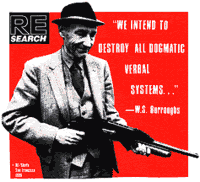
I first read about Edward Mordake in Re/Search Magazine, which quoted the original story from Anomalies and Curiosities of Medicine by George M. Gould and Walter L. Pyle, online here about halfway down the page. At the time, I assumed the story to be apocryphal, but over the years I've realized that it might be true, except for the voice (obviously), which no one else could hear. There are modern examples, as in this video of a Chinese man:


Our developing operatic version may be real or not real. It doesn't really matter. In Douglas Kearney's libretto, the other face is presented as an example of chimerism, a son that devours his sister in the womb, which is biologically unlikely. More probable is that Mordake was a variant of a conjoined twin, like the slave owners, stars and truly 'Siamese' twins Chang and Eng Bunker, whose commingled liver is on display at the Mütter Museum, a prime tourist spot for all those intrigued by the fringes of permutation of us, we featherless bipeds with broad, flat nails.

Labels: , , ,

Sunday, May 13, 2007

Baron Ochs


I've put up the scores and recent recordings of the orchestral suite from Baron Ochs on my website here, just the rather beautiful music from the piece, lovingly reorchestrated for the San Francisco Composers Chamber Orchestra, without the text, which was an odd little story that Everett Shock and I wrote back in the early 80's from some notes on 3x5 cards that he picked up off the ground. We didn't know it at the time, and it reflected a certain gap in my youthful cultural education, but the notes on the cards were from a study of Der Rosenkavalier by Richard Strauss. However, the notes were quite sketchy and thus, even though my piece and the late Herr Strauss's share a few characters (e.g. the Baron himself) and settings, they are in all other ways quite different from each other, my work touching on several esoteric issues, such as the separation of date palms by gender, which mostly likely would not have interested the other aforementioned composer.

My friend Earnest A. Z. Feathermouth graciously agreed to write program notes for the piece. As they are explicative, I have included an excerpt:

Ersatz opera con vivo; a pluralistic demonstration composed of a myriad of animistic elements: the puffy attractions of a porcine cockalorum surrounded by the greased trumpets of his sycophantic catamites, the naifish masochism of a vestal-skinned ward replete with bubbling womb, the soft squire whose tumescent lips add a wounded crimson to his otherwise pallid exterior, the dark servant with the dominating maw that feels so warm and reassuring, and the sublime Valzaccho whose turgid gasps and leering hands seem to add a certain beauty to the inexorable violence of this psychosexual drama. The ROSE BEARER provides an unctuously feral setting for this exploration of sexual confusion and its relation to religious conviction. Rather than presenting the basic theme in a simple diachronic form, it is unfolded in a synchronic fashion. At the same time, a wide variety of compositional techniques (linguistic, sonic, and theatrical) are used to produce a vibrant, if not scatological, environment certain to stimulate the most senseless of participants. While the vertiginously careening pace may upset the perineal appendages of meek and obese listeners, the spiritual confrontation that results amply justifies the risks. Questions of secular-sexual transgression (does god have a penis?) are universal and form an integral part of the personal experience of all salacious individuals in modern society. Nonetheless Baron Ochs does not go far enough into the psychoanalytic structures that support the occidental predisposition to hide or ratiocinate sexual misidentification with religious inculcation. Rather than destroying the baggage of Luther and the Calvinists, modern European society has added a shiny new patina, a hip-hop patois with tight pants. It is this preposterous "disco of the church" that continues to promulgate a false sense of procreative correctness. Despite this failing, Baron Ochs is an important and uplifting work, one that is certain to remain vivid, ominous, and as reckless as the brazen youth whose speeding motorcycle is moments from impact.